
Repairing what water leaves behind
Once the leak is mended, we remove what cannot be saved, keep what can, and rebuild the surface to match the room.
Get a free estimate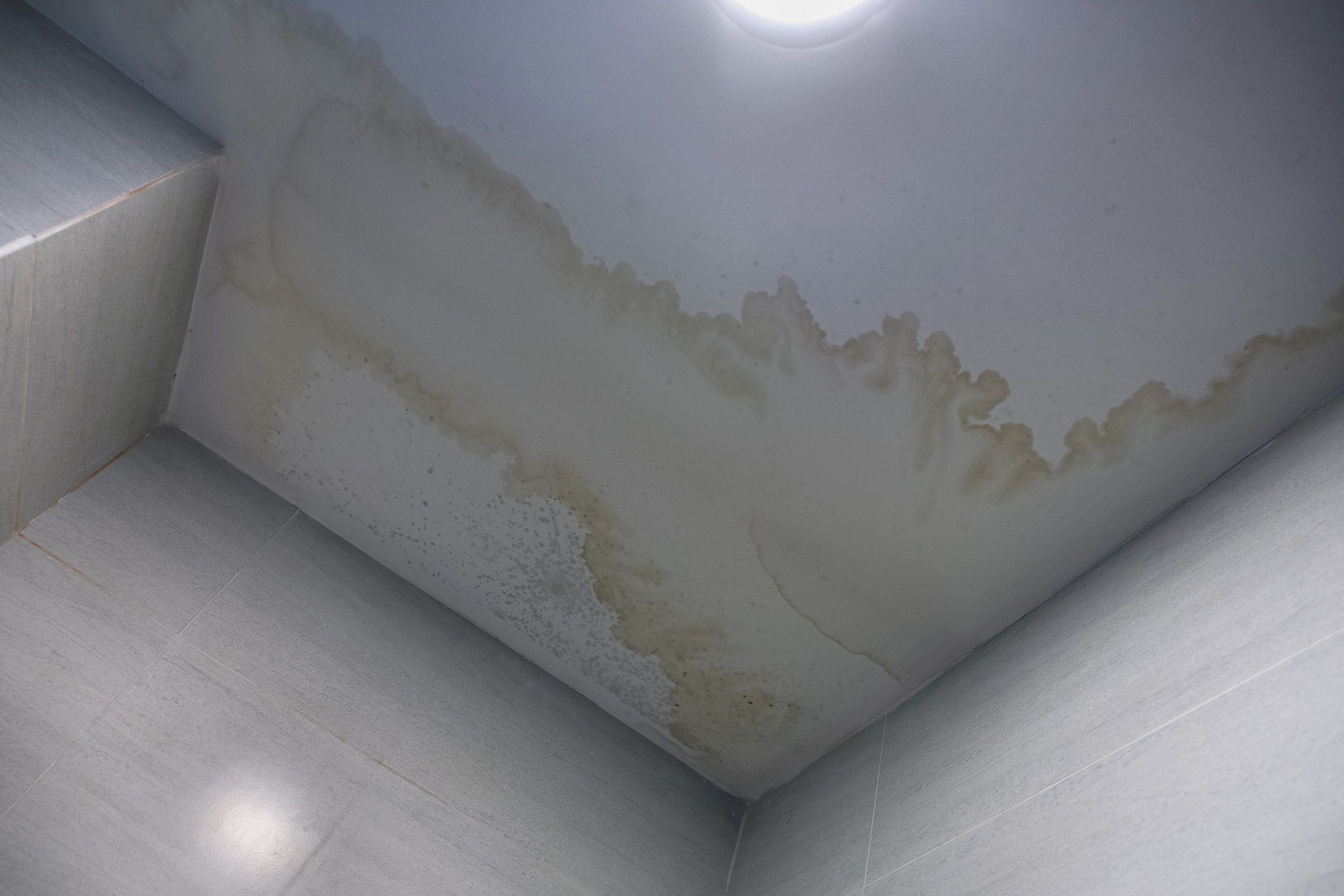
Water is patient and it travels. A failed flashing at a chimney may show itself as a stain six feet away. A slow leak under an upstairs bath can soak a ceiling for weeks before the paint finally blisters.
Our part begins when the source has been found and fixed. We establish the true extent of the damage, remove only what has genuinely failed, allow the structure to dry, and then rebuild so that the repair is indistinguishable from the wall or ceiling around it.
Judging what must go
Drywall that has been soaked loses its strength and should be replaced. Plaster is more forgiving. If it is still hard and firmly keyed to its lath, it can often be dried, sealed and kept, which is preferable to cutting into an original ceiling.
We decide with a moisture meter and by sounding the surface, not by the outline of the stain. Where plaster has gone soft, powdery or hollow, it is removed back to sound material.
Causes we commonly follow
- Ice dams
- Meltwater forced under shingles at the eaves of steep, older roofs.
- Flashing and chimney leaks
- Staining on upper ceilings near masonry.
- Bathroom plumbing
- Old drains and supply lines above a dining room or kitchen.
- Radiator and boiler piping
- Slow weeps at valves and joints.
- Basement seepage
- Damp rising into the base of finished walls.
The order of work
Confirm the repair upstream
The roofer or plumber must be finished first.
Measure and sound
We map moisture and locate loose or hollow areas.
Remove with restraint
Failed material only, cut to clean lines.
Dry thoroughly
Air movement and time until readings are normal.
Rebuild and blend
Infill, joint, skim and seal against staining.
Sealing and rebuilding
Water marks contain tannins and salts that pass straight through ordinary paint. Every stained area, whether replaced or retained, is sealed with a shellac- or oil-based stain blocker before finishing.
Where a section of plaster ceiling is replaced, we infill with board brought to the plaster’s level and then skim across both, so that old and new share one surface. In bathrooms we rebuild with moisture- and mold-resistant materials.
Why it merits proper attention
Nothing damp left hidden
The cavity is opened, checked and dried.
Original material preserved
Sound plaster is kept wherever it can be.
No ghost of the stain
Sealed correctly, it does not return.
Documentation
An itemized estimate and photographs for your insurer, on request.
On cost, and what moves it
With water, the visible mark is a poor guide to the extent of the damage. Water travels along joists and studs and spreads sideways through gypsum, so the wet area behind the paint is commonly larger than the stain. We measure with a moisture meter and cut back until the readings are dry. For that reason a firm price really requires a visit.
Duration matters more than volume. A supply line that burst and was shut off within the hour may leave a simple repair. A slow weep from a radiator valve that went unnoticed for a season can soften a wide area of ceiling. Ceilings cost more than walls to repair, and wet insulation must be replaced.
Where the water comes from in older houses
The sources are fairly consistent. Bathrooms on the upper floor, with their original drains and decades of recaulked tubs, account for many stained dining-room ceilings. Radiators and their valves account for others. Roofs with several valleys and dormers, which describes a great many Wauwatosa houses, leak at the flashings. And in late winter, ice at the eaves sends meltwater back under the shingles and down the inside of the outer walls.
Knowing which it is matters, because the surface cannot be closed until the source is cured. If the cause is uncertain we would sooner open a small inspection hole and look than guess.
Plaster and water
Plaster tolerates a brief wetting better than drywall does. It has no paper face to delaminate, and a ceiling that was wet for a day will often dry sound. Prolonged wetting is another matter. The plaster softens, the keys that hold it to the lath give way, and the ceiling begins to sag.
We test by pressing gently upward. Plaster that is firm and tight to its lath can be sealed against the stain and repainted. Plaster that moves must be dealt with, either by reattaching it or by replacing the affected area with board built up to the same thickness.
What to do now, and afterward
Stop the water if you can, and move what is beneath it. Photograph everything before it is disturbed, in case you intend to make an insurance claim. Whether a loss is covered is for your insurer to say. We can supply a written description of what was removed and replaced.
Get air moving across the wet area. Resist the wish to paint over the stain. The cavity must dry to a normal reading before it is closed, and in a humid week that can take several days.
When the repair is complete and primed with a stain-blocking primer, paint the whole wall or ceiling. Then watch the place through the next heavy rain. If nothing returns, the matter is closed.
A few particulars
Insulation is easily forgotten. Fiberglass that has been soaked does not dry inside a closed wall. It holds water against the studs and against the back of any new board. If it was wet, it comes out and is replaced.
An access panel is cheap foresight. Behind a tub valve, at a cleanout, beside a radiator shutoff. Where the leak came from something that may want attention again, we can set a small paintable panel in place of solid board, and the next repair will not need a saw.
Bathrooms deserve a second look while the ceiling below is open. A fan that is too small, or one that discharges into the attic instead of outdoors, leaves moisture in the room after every bath. The ceiling paint softens and the tape lifts. If that is the pattern, the ventilation should be put right along with the ceiling.
Ice dams call for work above as well as below. The staining they cause is simple to repair once things are dry. The remedy lies in the attic: more insulation, better air sealing, clear ventilation at the eaves. Without it, the same walls will be wet again the following March.
Keep a note of what happened: the date, the source, who repaired it. Should a mark return, that note will tell you at once whether it is the old trouble or something new.
One further precaution for houses with radiators: have the valves and unions looked over at the start of each heating season. A slow weep at a fitting is easily tightened in October and is the usual origin of the ceiling stain discovered in February.
Before and after
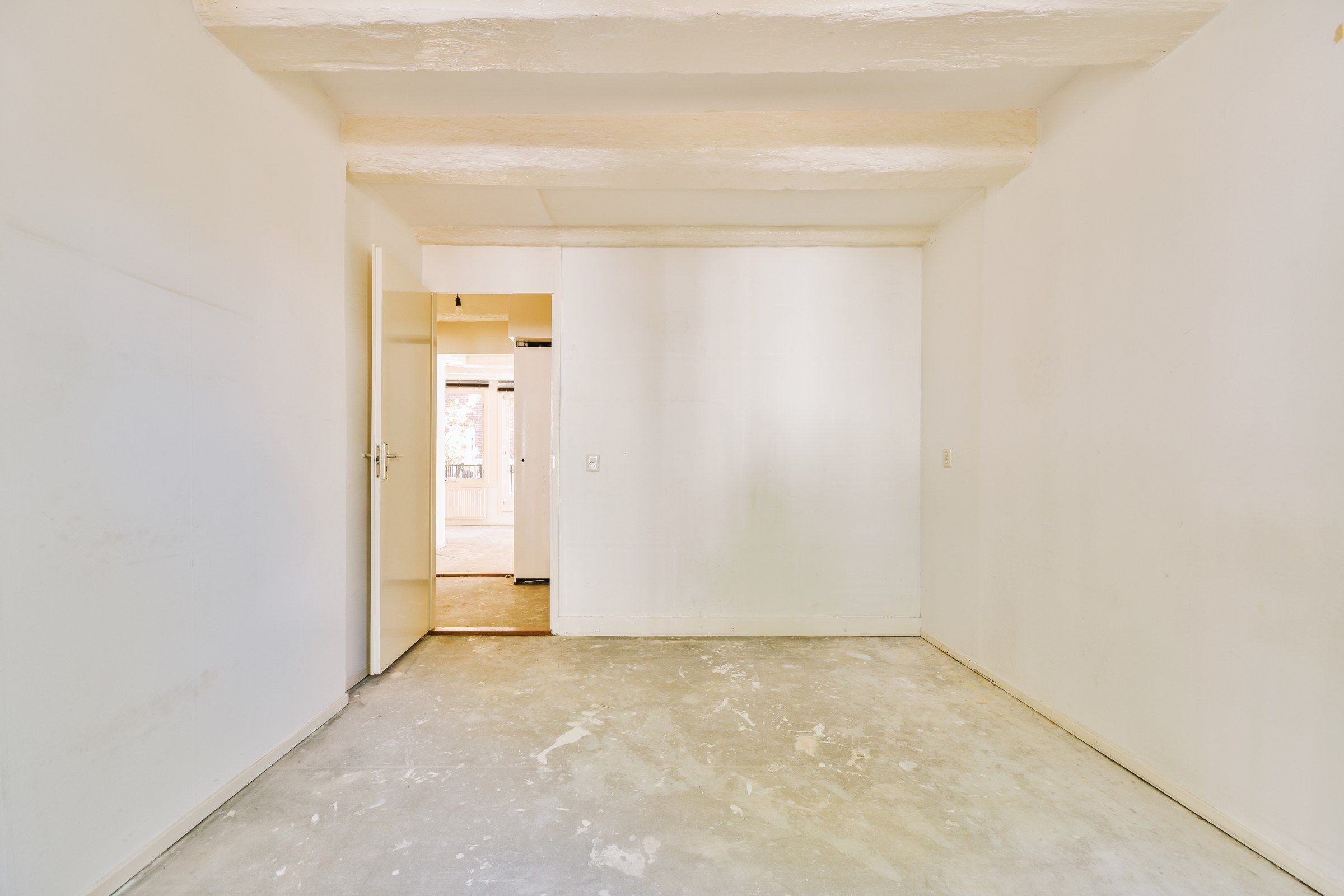
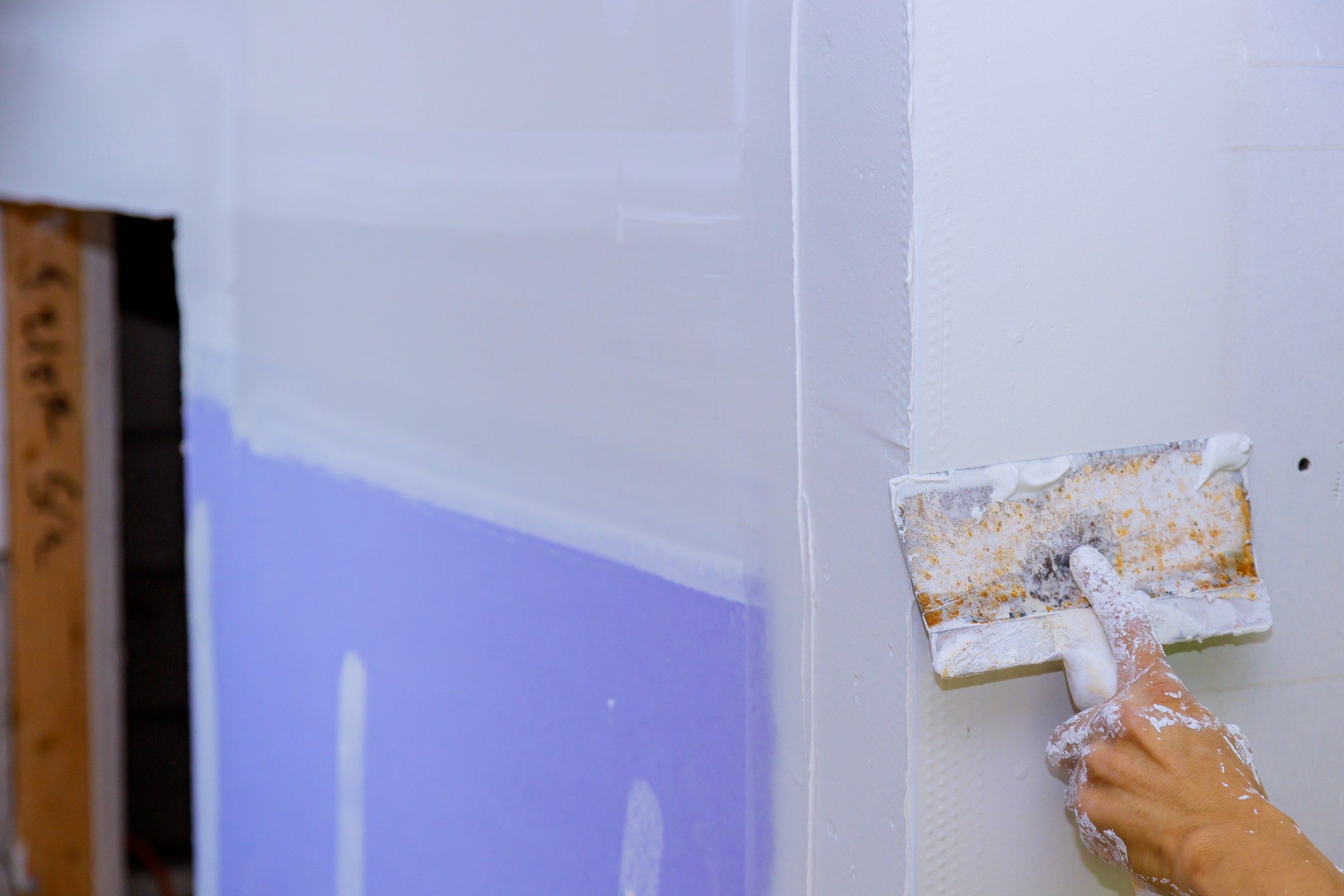
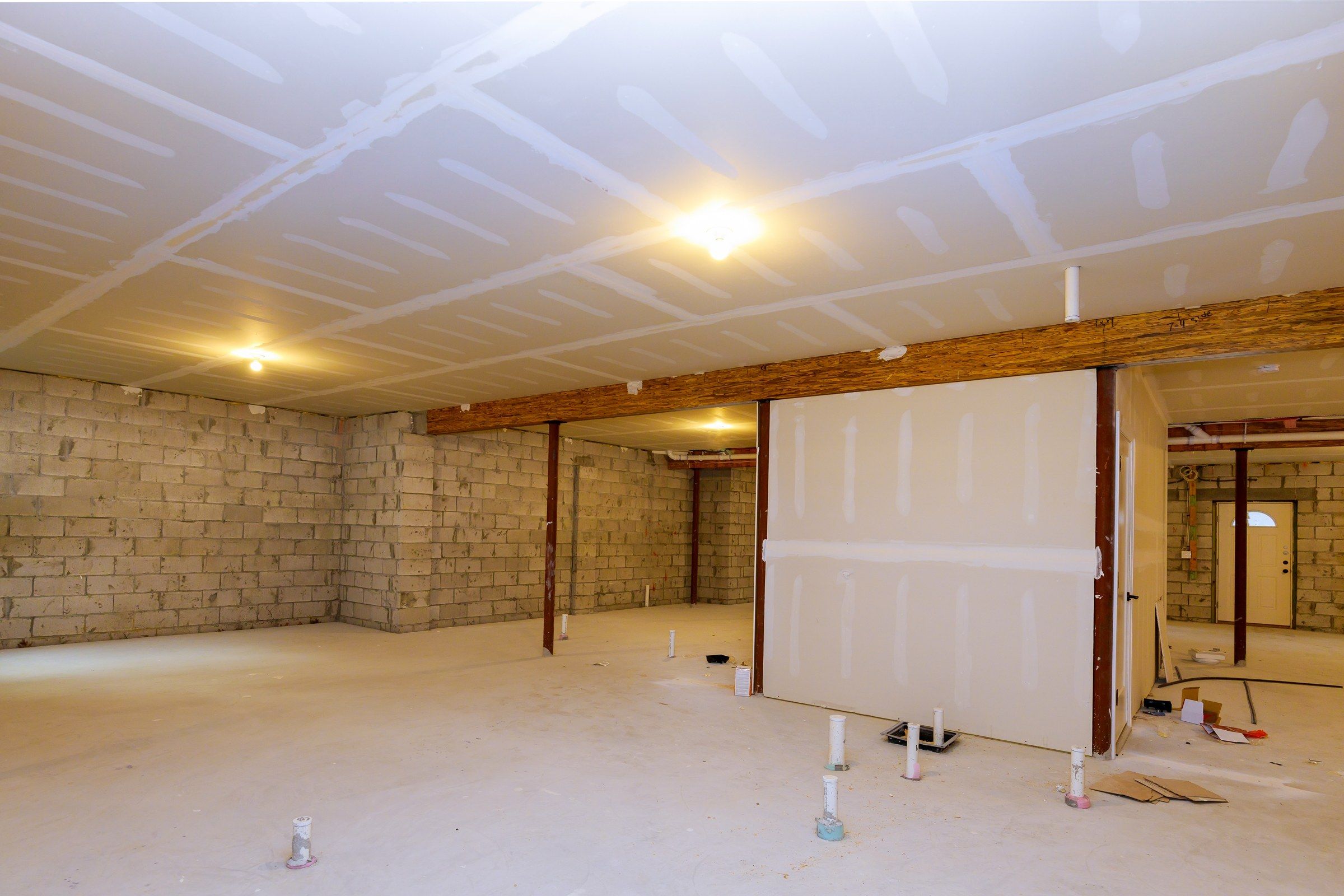
Illustrative stock photographs, not a project of our own.
Water and Wauwatosa roofs
The steep slate and shingle roofs that give Tosa’s Tudors and colonials their profile are also prone to ice dams. Their eaves are cold, their attics were insulated late if at all, and their valleys and dormers give meltwater many places to gather.
We see the results each February and March: staining along the outer edge of upstairs ceilings and down the top of exterior walls. It is a familiar pattern and a very repairable one.
Questions on water-damaged drywall repair
Can a stained plaster ceiling be saved?
Frequently, yes. If the plaster is hard and still attached, it can be dried, sealed and repainted without replacement.
How do you know it is dry?
We take meter readings and compare them with an unaffected area of the same wall or ceiling.
What if there is mold?
Limited surface growth is cleaned and treated. Anything extensive is referred to a remediation specialist before we continue.
Will you help with an insurance claim?
We provide a detailed written estimate and photographs. The claim itself rests with you and your adjuster.
Do you repair the leak?
No. That is work for a roofer or plumber, and it must come first.
Related
Work often done alongside
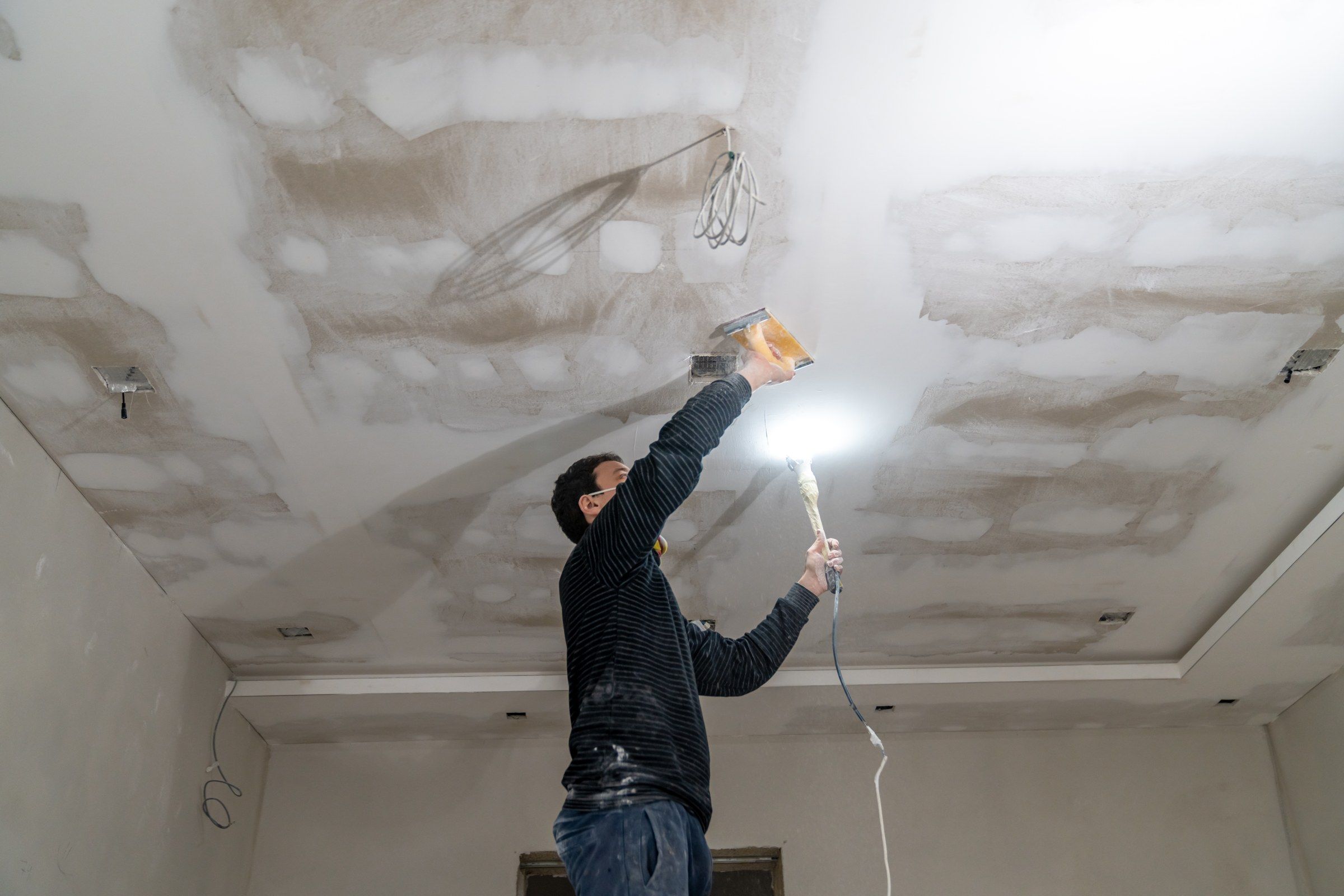
Ceiling Drywall Repair
Cracked, sagging and stained ceilings stabilized and made level.
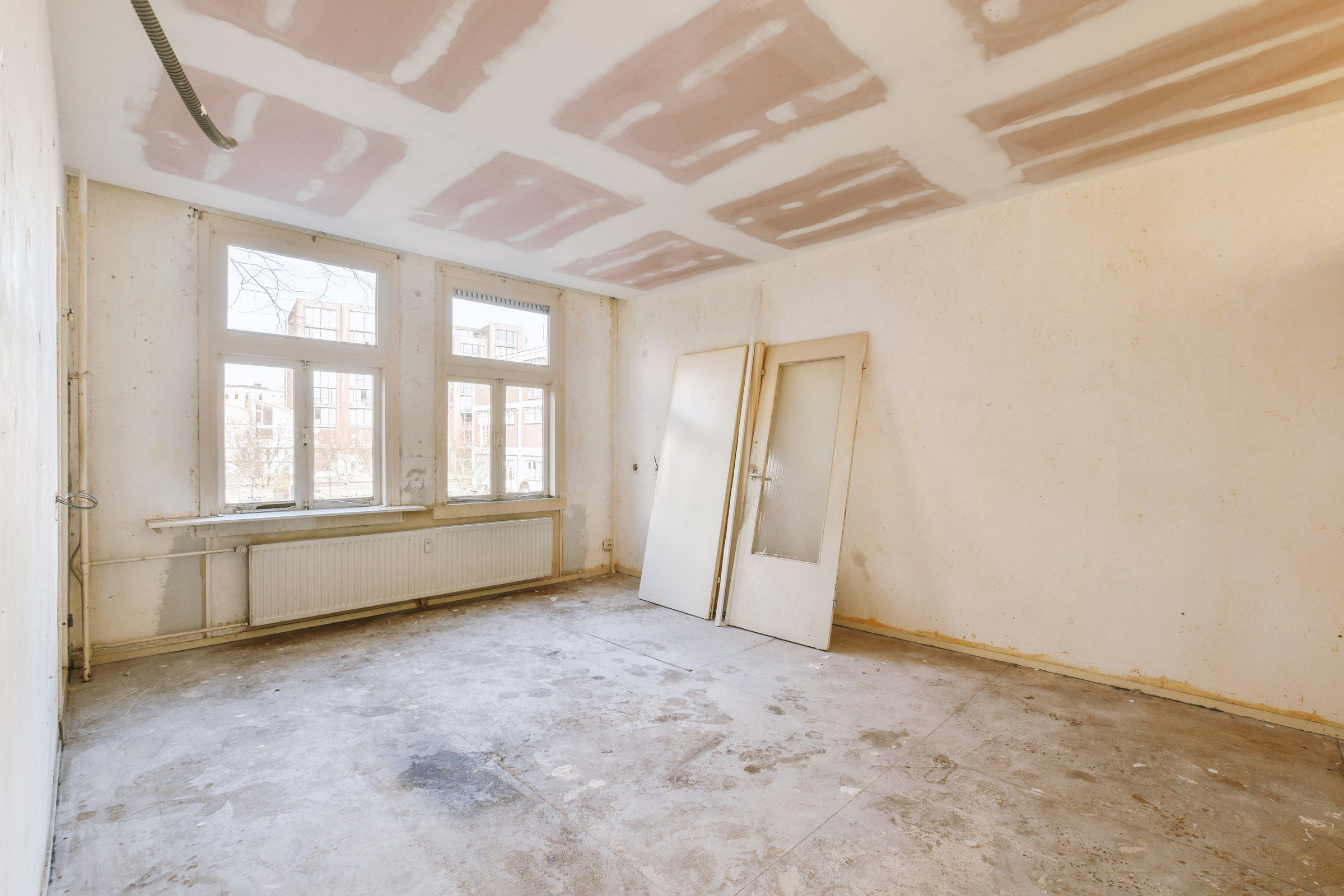
Drywall Repair
Cracks, loose tape, damaged corners and tired surfaces, restored with care.
Drywall Patching
Openings closed and blended until the wall reads as untouched.
Basement Drywall Installation
Lower levels finished with respect for old foundations and low ceilings.
May we quote for this?
Tell us about your water-damaged drywall repair project in Wauwatosa. A written estimate follows, without charge.
Get a free estimate