
Patching that leaves no trace
Holes from electricians, plumbers and ordinary life, closed with enough care that you will forget where they were.
Get a free estimate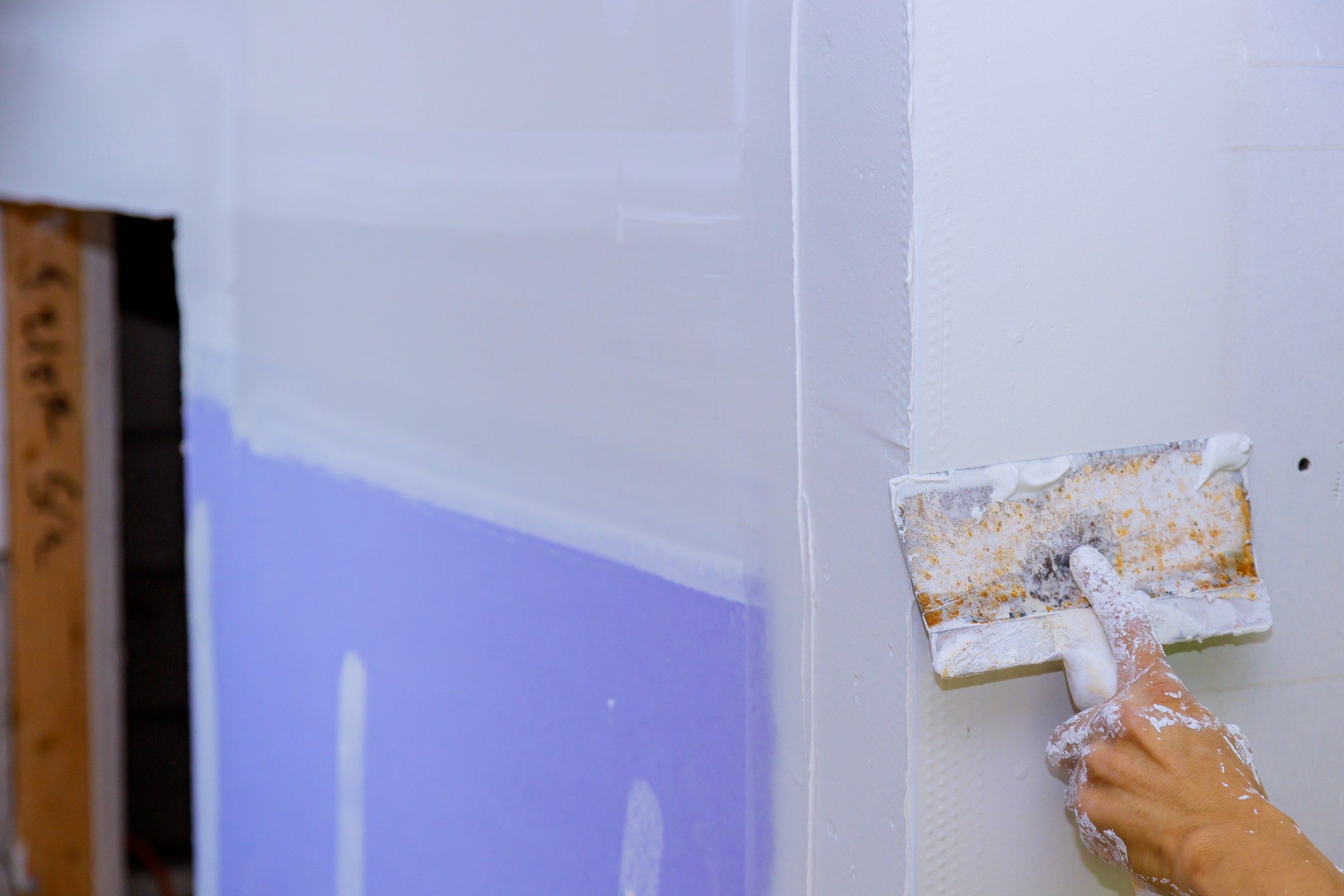
Older houses are forever being opened up. Knob-and-tube wiring comes out and modern cable goes in. Galvanized pipe gives way to copper or PEX. A radiator is moved. Each improvement leaves a scatter of holes, and the electrician and the plumber are not paid to make walls beautiful.
That part falls to us, and we take a quiet satisfaction in it. A wall that has had six holes cut in it can be returned to a state where no one, including the person who cut them, could say where they were.
The method
Each opening is trimmed to a clean shape and given solid backing. The infill is cut from board of the right thickness. In a plaster wall that may mean two layers, or a base of setting compound built up in lifts, so the patch finishes flush with the surrounding surface.
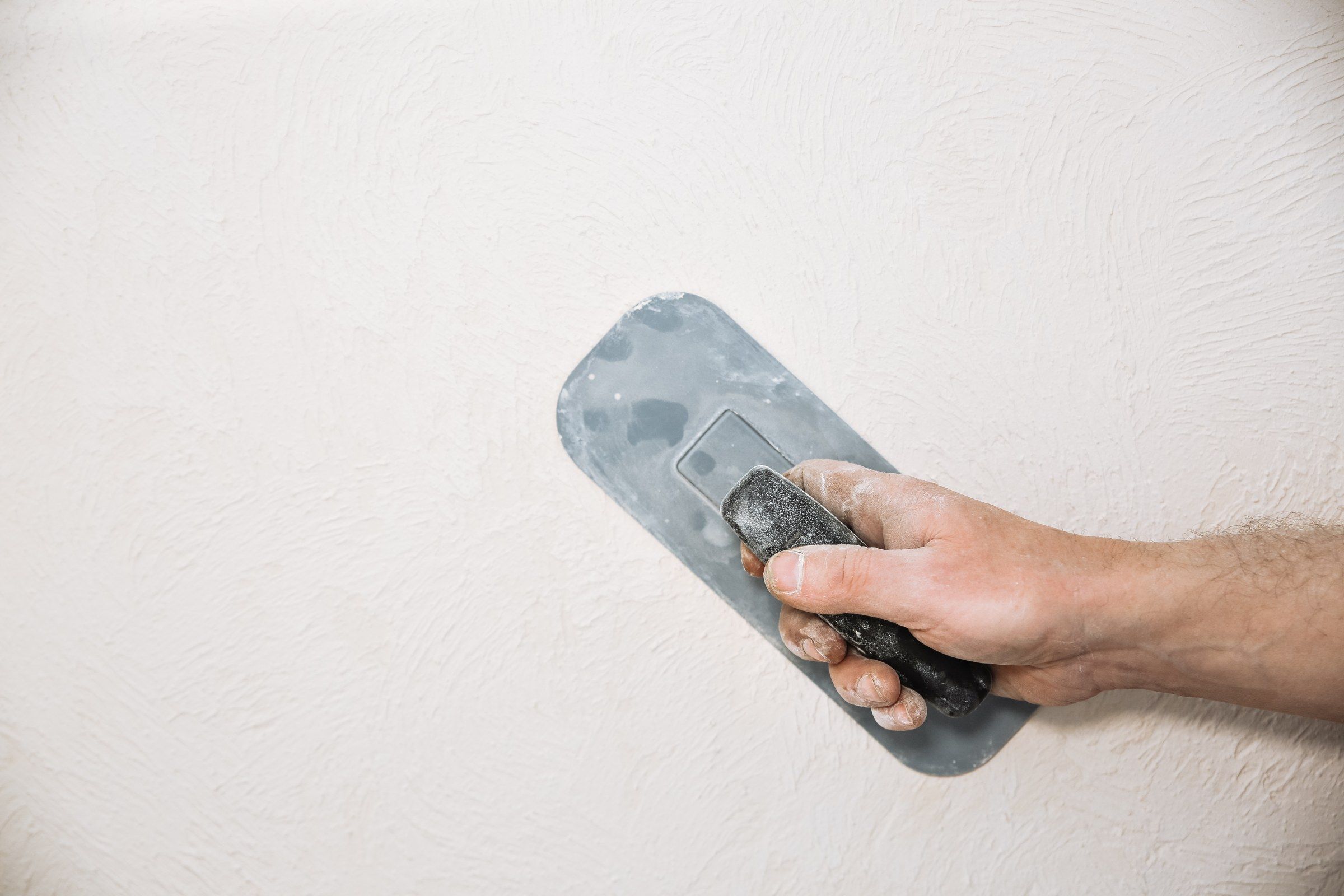
The joint is taped and coated three times, each coat drawn out further than the last. Finally we match the surface: dead smooth, lightly sand-finished, or with the faint trowel marks of the original plasterer.
Openings we close
- Rewiring channels and boxes
- Dozens of small openings after an electrical update.
- Plumbing access
- Cuts behind baths and kitchens, and in ceilings below them.
- Removed fixtures
- Old sconce boxes, thermostats, radiator pipes and registers.
- Impact damage
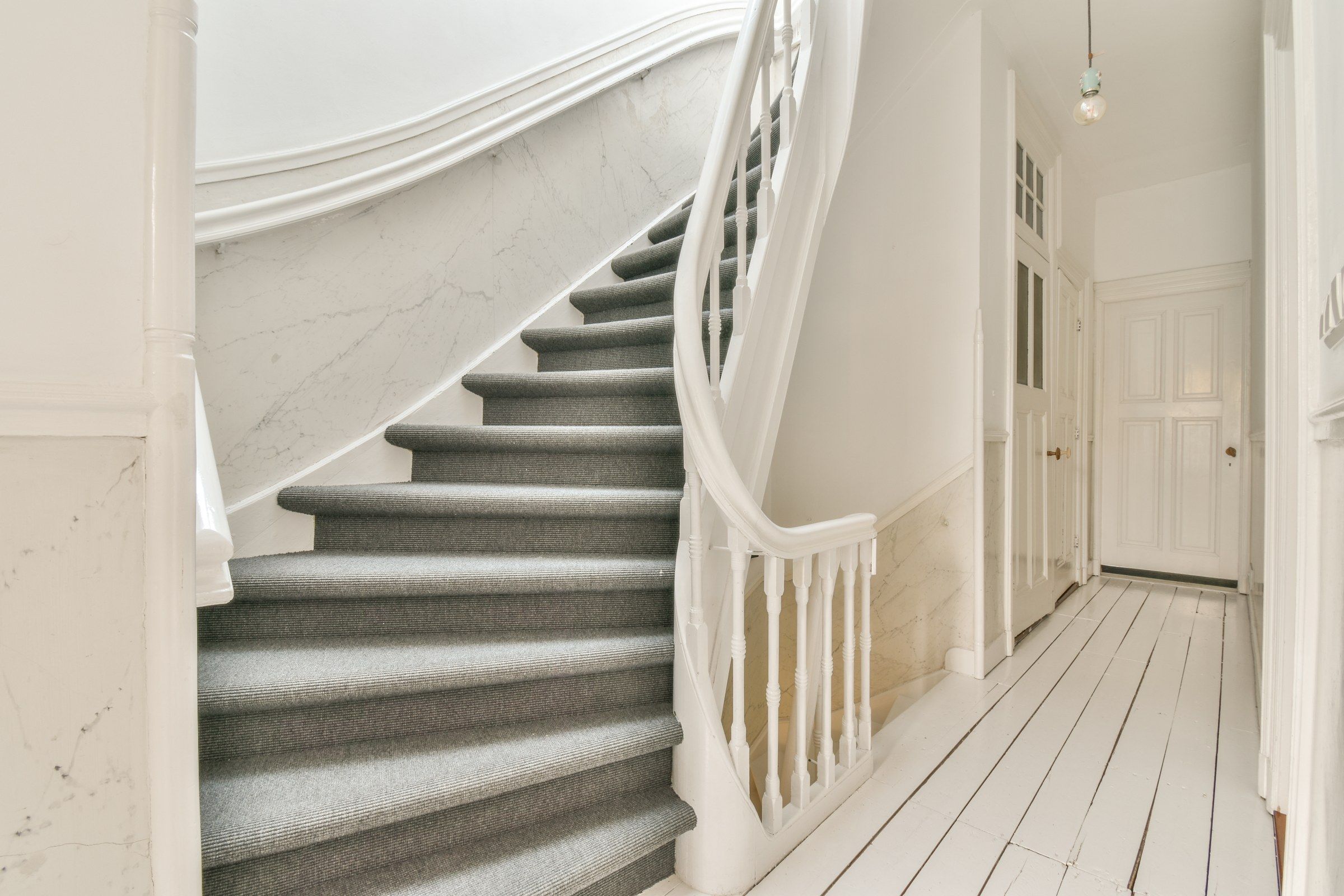
- Door handles, furniture and the occasional misjudged staircase turn.
- Failed earlier repairs
- Patches that have cracked, sunk or always showed.
Step by step
Assess the wall
Plaster or drywall, thickness, lath type and surface texture.
Prepare the opening
Loose material removed, edges made firm, backing fixed.
Infill
Board or setting compound brought flush.
Tape and coat
Three coats, feathered widely.
Match the surface
Texture and plane made to agree with the wall around it.
Plaster walls need different handling
Plaster is harder and thicker than drywall, and the edge of a cut tends to be brittle. We stabilize it with a bonding agent, bridge the joint with fiberglass mesh set in setting-type compound, which holds better on plaster than paper tape does, and finish over that.
Ordinary premixed compound alone is too soft for the base of a plaster repair. A setting compound, mixed from powder, cures hard and bonds well, and that is what we use beneath the finish coats.
What a good patch gives back
A whole wall
Visually and to the touch.
A lasting repair
No hairline outline appearing a year on.
A matched finish
Texture consistent with the room.
Readiness for paint
Sealed, sanded and dust-free.
On cost, and what moves it
It surprises people that the size of a hole has so little to do with the cost of mending it. The material is trivial. The time lies in the steps: trimming the opening, backing it, fitting the infill, taping, three coats each drawn wider than the last, and the drying between them. A hole the size of a saucer and one the size of a dinner plate take very nearly the same care.
What does alter the cost is the number of patches, their position, and the surface they must match. Six openings left by an electrician can be dealt with in the same visits as one. A patch on a ceiling, or high on a stair wall, takes longer than one at eye level. And a wall with a sand finish or the trowel marks of an old plasterer must have that surface reproduced over the repair.
Patching in plaster
Plaster walls are thicker than drywall, often three-quarters of an inch or more, and the thickness varies across a single wall. A patch has to be built up to meet it. Sometimes that means two layers of board. Sometimes it means board set slightly back and brought flush with a setting compound applied in lifts.
The edge is the delicate part. Old plaster can be brittle where it has been cut, and loose material must be removed until the edge is firm. The joint between old plaster and new infill is then reinforced and bedded, because two materials meeting will always want to show a line.
Where the lath behind is intact, it is useful. It gives something to fasten to and holds the patch in plane. Where it has been cut away, we add backing.
After the trades have been
The commonest reason for patching in an older house is improvement. Rewiring leaves a trail of openings at switches, ceiling fixtures and the tops of walls where cable has been fished. Replumbing leaves larger ones behind bathrooms and kitchens. New ductwork for air conditioning leaves the largest of all.
It is best to wait until every trade has entirely finished. A wall patched on Monday and reopened on Thursday for one more cable is a wall patched twice. When the last of them has gone, send us the list and we will close everything in a single campaign.
What we would ask of you, and what follows
A photograph of each opening, with something in the frame for scale, and a word about what the wall is made of if you know. Clear a little space around each one. Tell us whether the room is to be repainted, since that decides how far the blending needs to go.
When the patches are sanded, they must be primed before paint. Bare compound absorbs paint and leaves a dull shape on the wall that no second coat will hide. In a room with older paint, expect to repaint each mended wall from corner to corner.
A few particulars
Thickness must agree. Most modern walls are half an inch. Some ceilings are five-eighths. Early drywall can be three-eighths, and plaster is thicker than any of them. An infill cut from the wrong thickness will sit proud or shy of the wall, and compound will not disguise it for long. We measure at the cut edge before choosing material.
A hole near a corner is a different undertaking from one in open wall. The corner itself has to be rebuilt as part of the repair, and in an older house that corner may be slightly rounded from many coats of plaster and paint. We shape the new work to match it.
Where a fixture has been moved and its old box left in the wall, the box should be properly dealt with by an electrician before it is covered. A live junction must stay accessible. We will point out any we find.
If a doorknob made the hole, fit a stop. If a shelf pulled its anchors, remount it to the framing. The best patch is the one that does not have to be made twice.
Lastly, keep a note of each wall color and its sheen. When a wall next needs mending, the right paint in a labeled tin does half the work of hiding the repair.
Before and after
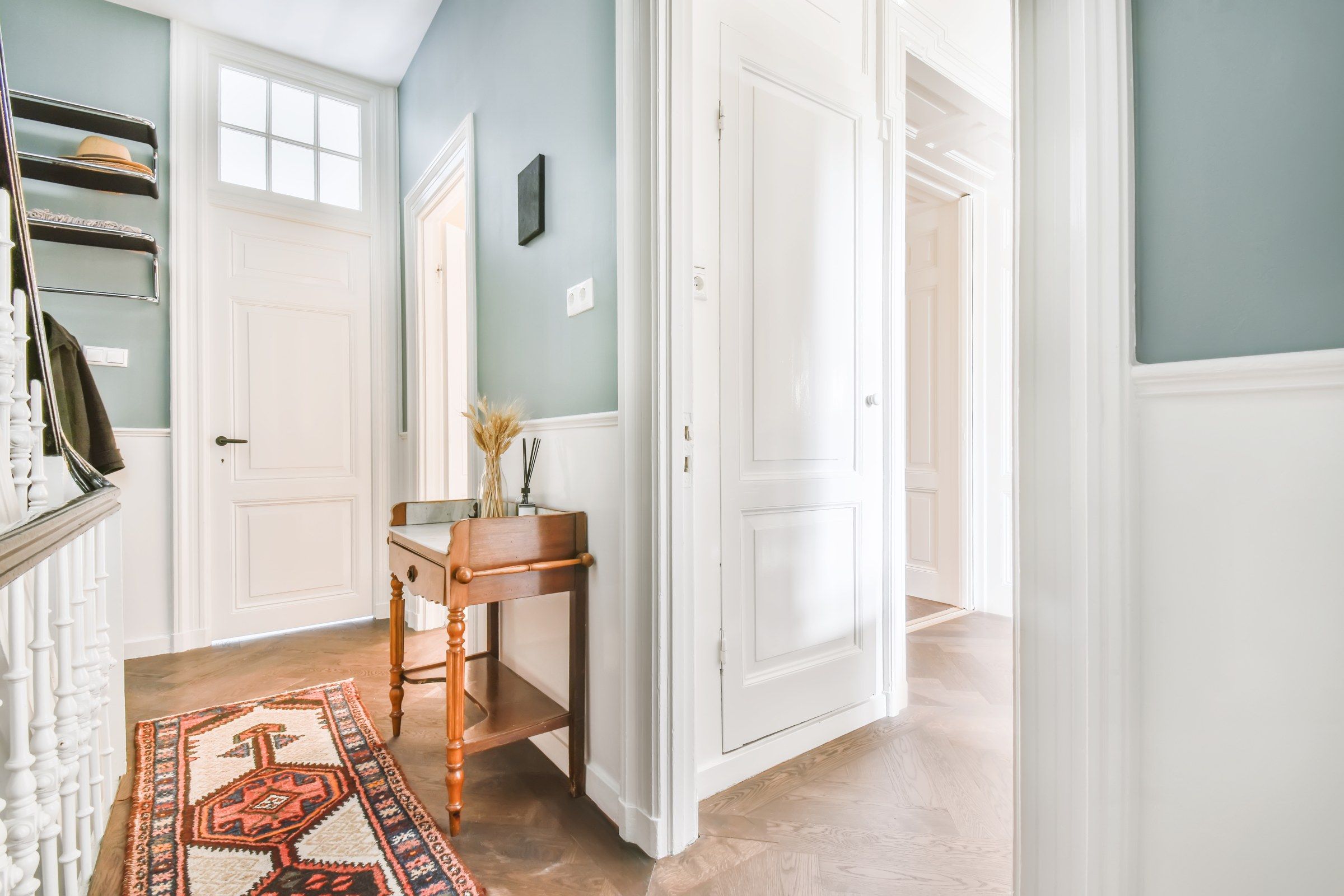
Illustrative stock photographs, not a project of our own.
Patching in Wauwatosa homes
A great many houses here have been through an electrical or plumbing update in the last decade, or are about to. Insurers and buyers increasingly ask for it. We are often the final trade in such a project, following the electrician from room to room.
If you are planning that work, a word beforehand is useful. Where and how the openings are cut makes a real difference to how invisibly they can be closed.
Questions on drywall patching
Can you patch plaster with drywall?
Yes. A drywall infill, shimmed to the plaster’s thickness and properly jointed, is a sound and long-accepted repair.
Will the patches show after painting?
They should not, provided the wall is primed and painted as a whole. We prepare the surface so that it can be.
How many holes can you do in a visit?
As many as there are. A house full of rewiring patches is typically two or three visits across a week.
Can you coordinate with my electrician?
We would be glad to. A brief conversation in advance usually means fewer and neater openings.
What about hairline cracks nearby?
We will address them at the same time. It is more economical than a separate call.
Related
Work often done alongside
Drywall Repair
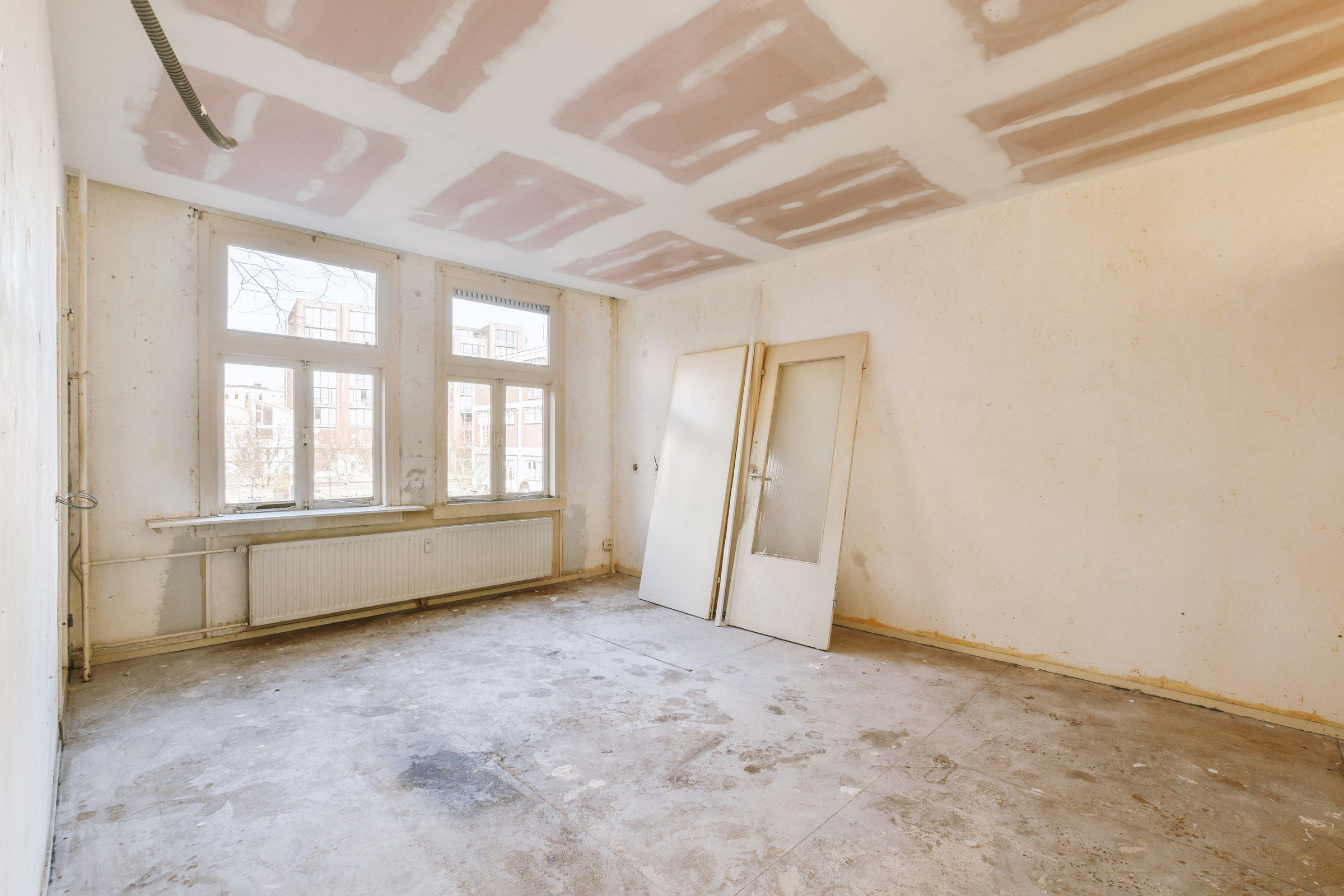
Cracks, loose tape, damaged corners and tired surfaces, restored with care.
Ceiling Drywall Repair
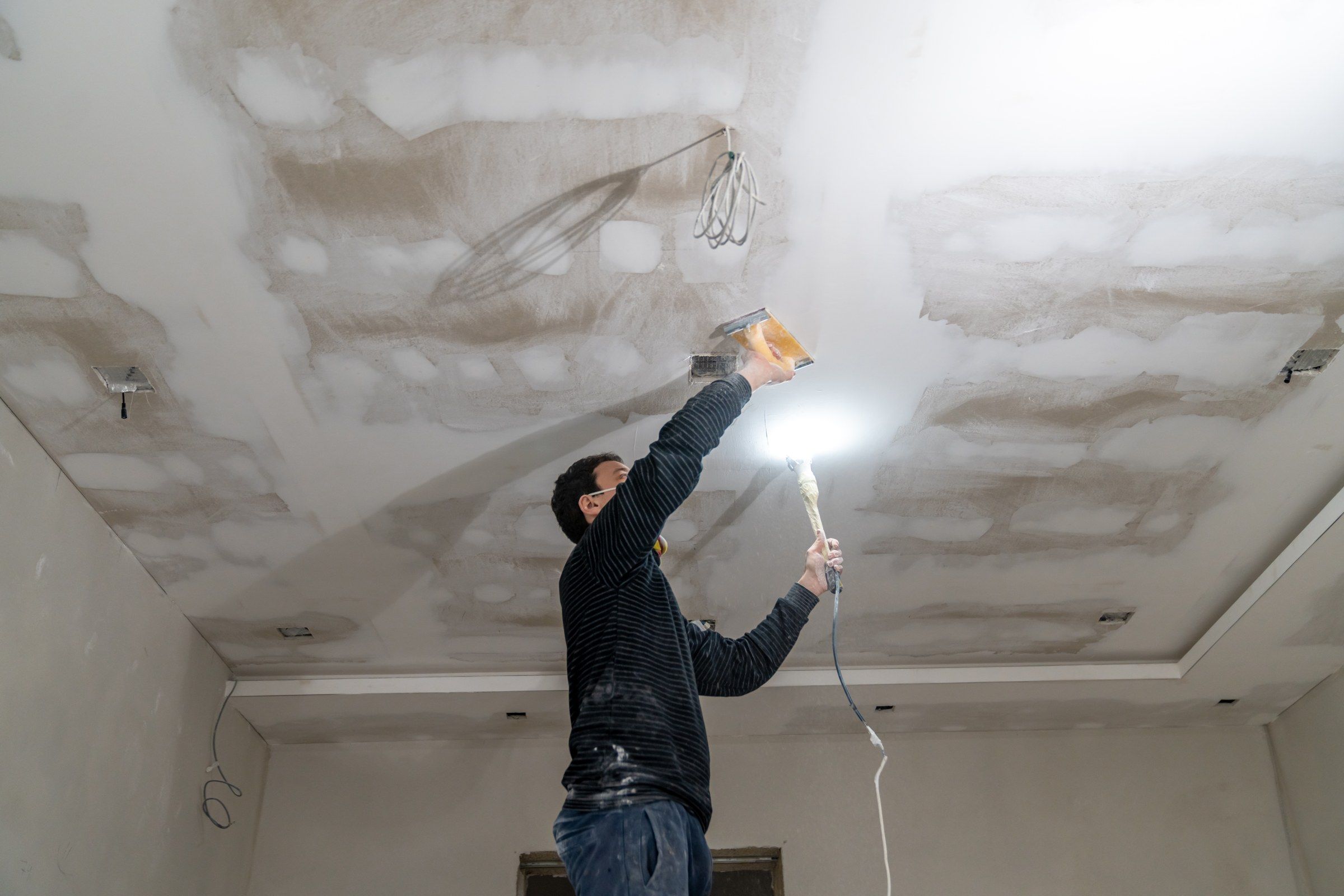
Cracked, sagging and stained ceilings stabilized and made level.
Residential Drywall Services
Drywall and plaster-sympathetic work for the houses of Wauwatosa.
Drywall Finishing
Level 5 surfaces, skim coats and plaster-like finishes for rooms that deserve them.
May we quote for this?
Tell us about your drywall patching project in Wauwatosa. A written estimate follows, without charge.
Get a free estimate